
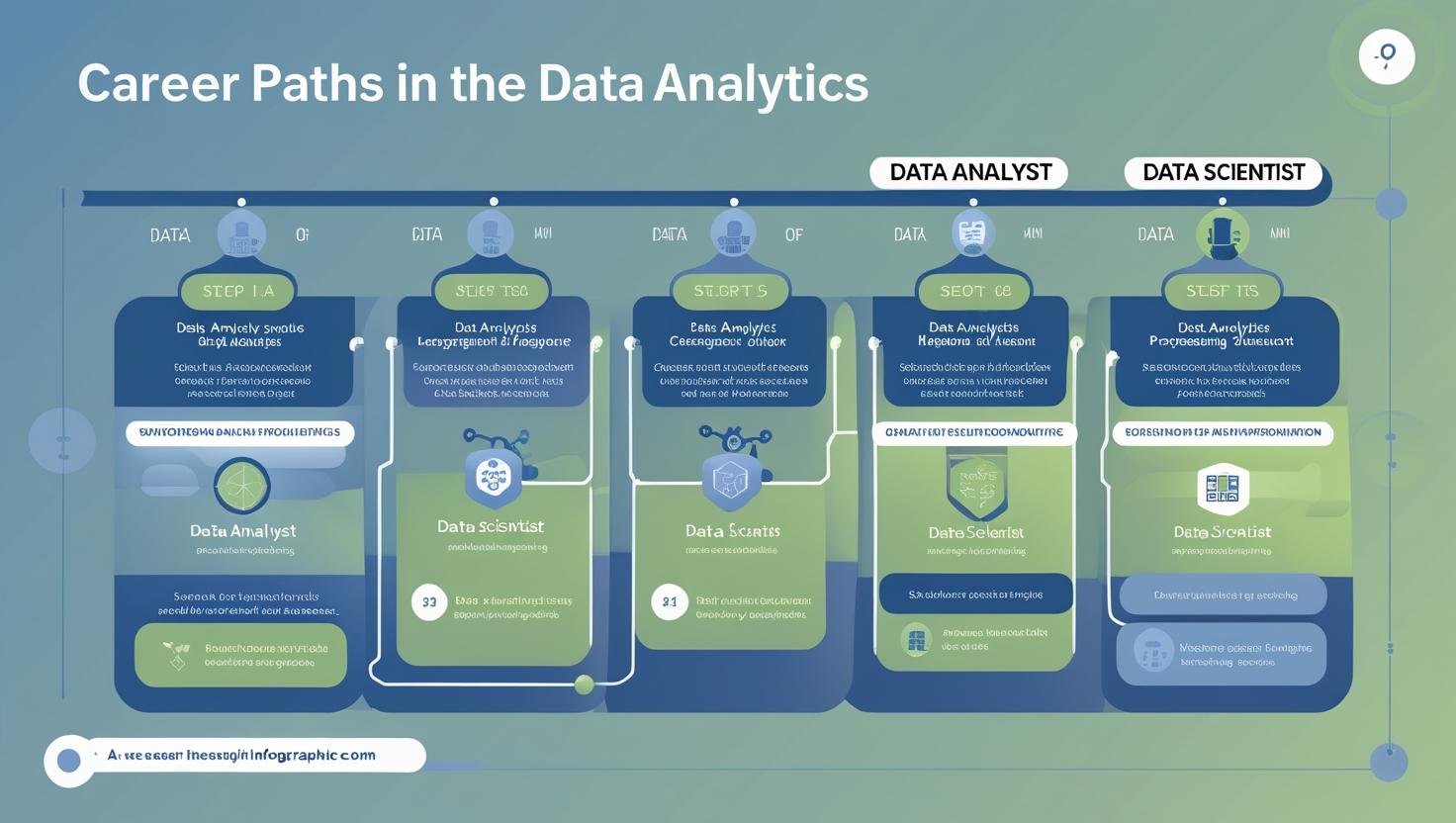
Career Paths in Data Analytics: From Analyst to Scientist
Explore the different career paths in data analytics—from entry-level analyst roles to advanced positions like data scientist and analytics manager. Understand the skills, tools, and growth opportunities at each stage.
Introduction
Data analytics is one of the most promising and dynamic career fields today. With businesses generating massive volumes of data daily, the demand for professionals who can extract insights and drive decisions has never been higher.
But the term “data analytics” covers a wide range of roles—from entry-level analysts to advanced data scientists and domain specialists. This article breaks down the career path in data analytics, including roles, responsibilities, tools used, and how to grow step-by-step.
1. Starting Point: Data Analyst
Who they are:
Data Analysts collect, clean, and interpret data to help companies make informed decisions. This is often the entry-level role into the world of data.
Key Responsibilities:
- Data cleaning and preparation
- Creating reports and dashboards
- Analyzing trends and KPIs
- Presenting insights to stakeholders
Common Tools:
Excel, SQL, Power BI, Tableau, Google Sheets
How to grow:
Master business problem-solving, improve your storytelling with data, and gradually learn scripting languages like Python or R.
2. Business Analyst / Reporting Analyst
Who they are:
Business Analysts bridge the gap between data and decision-makers. They focus on business processes, operations, and requirements—not just numbers.
Key Responsibilities:
- Gathering and analyzing business requirements
- Monitoring KPIs for departments
- Recommending process improvements
- Writing reports and narratives using data
Common Tools:
Excel, Power BI, Tableau, SQL, BPMN tools
How to grow:
Build strong domain expertise (e.g., finance, supply chain, HR), develop communication and documentation skills, and understand how analytics ties into business strategy.
3. Data Engineer (Optional Path)
Who they are:
Data Engineers build and maintain data pipelines, databases, and platforms for large-scale analytics. Though more technical, many data analysts pivot into this role.
Key Responsibilities:
- Designing data pipelines
- Ensuring data quality and scalability
- Working with big data systems
- Collaborating with analysts and scientists
Common Tools:
SQL, Python, Spark, AWS, Hadoop, Snowflake
How to grow:
Gain strong command over SQL and Python, explore data architecture concepts, and understand data warehousing platforms.
4. Data Scientist
Who they are:
Data Scientists use statistics, machine learning, and advanced programming to build predictive and prescriptive models.
Key Responsibilities:
- Building machine learning models
- Performing statistical analysis
- Experimentation and hypothesis testing
- Solving complex business problems with data
Common Tools:
Python, R, Jupyter, Scikit-learn, TensorFlow, SQL
How to grow:
Develop strong mathematical foundations, learn ML algorithms, and focus on solving real business problems with explainable models.
5. Analytics / Data Science Manager
Who they are:
Leads a team of analysts or scientists, aligning data projects with business goals. Combines strategic thinking with technical oversight.
Key Responsibilities:
- Defining analytics strategy
- Managing team output and timelines
- Communicating insights to leadership
- Collaborating across departments
Common Tools:
Project management tools, BI platforms, stakeholder communication frameworks
How to grow:
Strengthen leadership, decision-making, and storytelling skills. Understand business impact and develop mentorship capabilities.
6. Domain Specialist or Consultant (Lateral Path)
Who they are:
These professionals bring deep domain expertise (finance, healthcare, marketing, etc.) along with analytics skills to offer tailored solutions.
Key Responsibilities:
- Combining industry knowledge with analytics
- Leading client-facing discussions
- Building domain-specific dashboards or models
Common Tools:
Excel, Power BI, Tableau, SQL, domain-specific CRMs and ERPs
How to grow:
Stay updated with domain trends, understand key business metrics, and work on cross-functional projects.
7. Specialized Roles in Analytics
Depending on your interest, you can branch into:
- Marketing Analyst
- Product Analyst
- Financial Analyst
- Healthcare Data Analyst
- Operations Analyst
- AI/ML Engineer (if you take a more technical path)
Conclusion
A career in data analytics offers multiple paths depending on your interests—whether it’s solving business problems, building data pipelines, or developing AI models.
You can start with non-coding tools like Excel and Power BI, then expand into programming, statistics, or domain-specific analytics as you grow. The journey from analyst to scientist (or manager) is about learning continuously and applying your skills in real-world business contexts.
Want to Build Your Career in Data Analytics?
At Data Analytics Edge by Nikhil Analytics, we help students and working professionals begin and grow their careers in analytics:
- Beginner to advanced-level training
- Hands-on projects with Excel, SQL, Power BI, Python
- Domain-based learning in BFSI, Retail, and Healthcare
- Internship and job support for all learners
🌐 Website: [https://www.nikhilanalytics.com/data-analytics/]
Tag:Data Analytics, Scientist

You may also like

Real-World Applications of Business Analytics

Must-Read Books for Aspiring Analysts
