
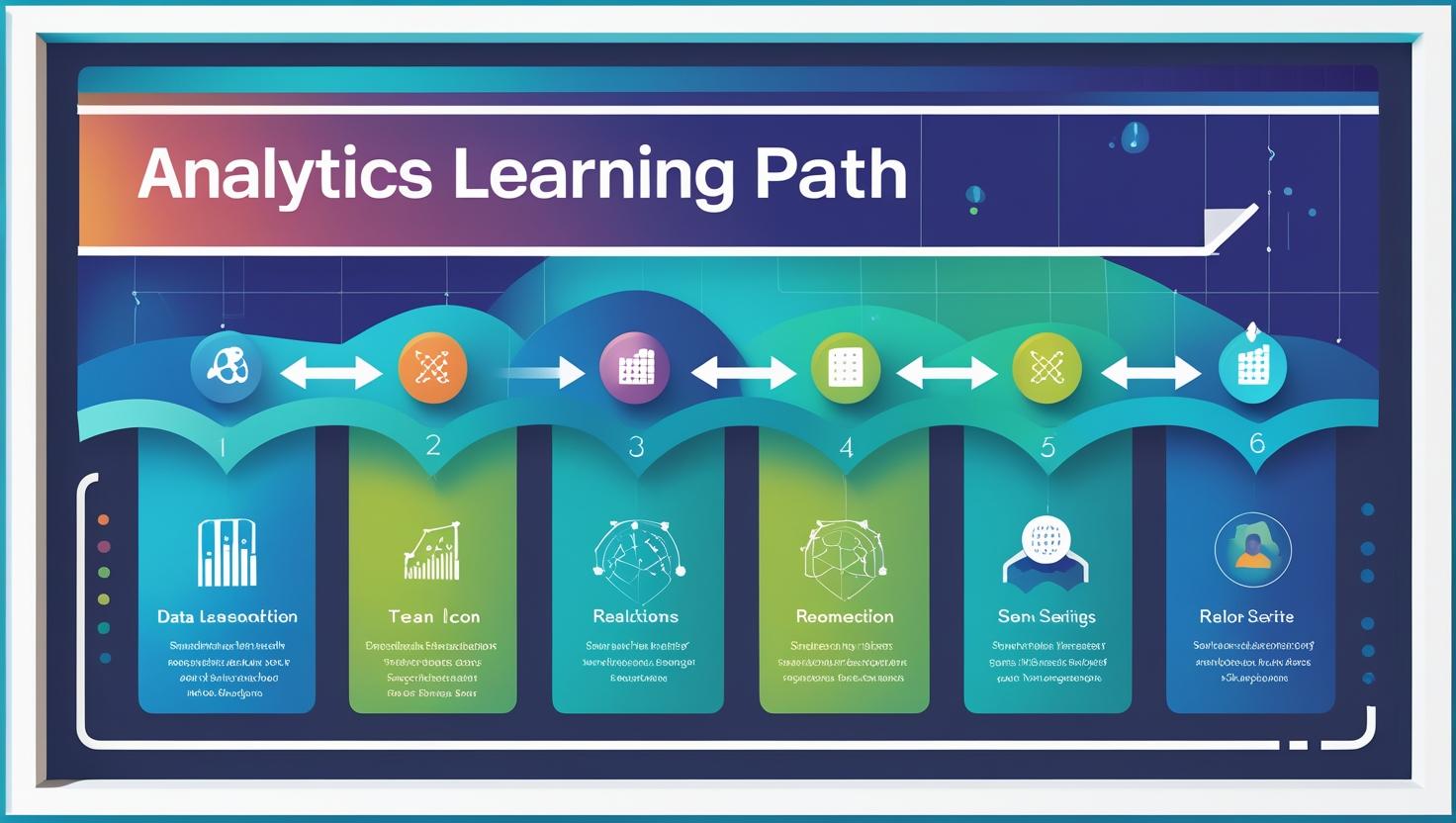
The Analytics Learning Path: Step-by-Step Guide
Discover the complete analytics learning path—tools, skills, and stages to go from beginner to expert in data analytics and business intelligence
Introduction
Getting started in data analytics can feel overwhelming. With so many tools, techniques, and roles, where do you begin?
This article breaks down the analytics learning path into a clear, step-by-step roadmap—ideal for students, career switchers, and working professionals.
Whether you aim to become a data analyst, business intelligence expert, or data-driven manager, this guide shows you what to learn, in what order, and how to build real skills.
🔹 Step 1: Understand the Basics of Analytics
Start by learning what analytics actually means:
- Descriptive vs. diagnostic vs. predictive vs. prescriptive analytics
- Key roles: Data Analyst, BI Analyst, Data Scientist
- Core concepts: KPIs, trends, decision support
👉 Read: What Is Data Analytics? Understanding the Basics
🔹 Step 2: Master Excel for Data Analysis
Why Excel?
It’s the most widely used tool in analytics, especially in business.
Key topics to learn:
- Data cleaning and formatting
- Lookup formulas (VLOOKUP, INDEX-MATCH)
- Pivot tables and charts
- Dashboarding
👉 Explore our Excel for Data Analytics Course
🔹 Step 3: Learn SQL for Data Extraction
SQL is essential for working with databases.
You’ll use it to:
- Query data from multiple tables
- Join, filter, and group large datasets
- Create views and subqueries for reporting
👉 Read: Why SQL Is Key in Data Analytics
🔹 Step 4: Build Visualizations with Power BI or Tableau
Data visualization turns analysis into actionable insight.
What to focus on:
- Creating dashboards
- Using slicers and filters
- Designing reports for business users
- Understanding DAX (Power BI) or calculated fields (Tableau)
👉 Power BI for Professionals Course
🔹 Step 5: Understand Business Use Cases
Apply your skills to solve real problems in:
- BFSI
- Healthcare
- Retail
- Marketing & HR
Case studies help bridge the gap between tools and outcomes.
👉 Explore industry-focused analytics courses
🔹 Step 6: Learn Statistics & Intro to Python (Optional)
To move deeper into analytics or data science:
- Learn basic statistics (mean, median, standard deviation, correlation)
- Explore Python for data cleaning and analysis (Pandas, Matplotlib)
- Start with Jupyter Notebooks and real-world datasets
👉 What Is Statistical Modelling? A Practical Guide
🔹 Step 7: Work on Projects & Build Your Portfolio
Build at least 2–3 end-to-end projects:
- Start with problem definition
- Clean and analyze data
- Visualize insights in dashboards
- Share on GitHub or your resume
Projects prove your capability more than certificates.
🔹 Step 8: Prepare for Interviews & Certification
Finally, get job-ready:
- Practice SQL and case study questions
- Review Excel/PBI dashboards
- Learn how to explain your projects clearly
- Optional: Google Data Analytics, Microsoft Power BI, etc.
✅ Conclusion
The path to becoming a skilled data professional doesn’t have to be confusing.
By following this step-by-step analytics learning path, you can:
✅ Build strong technical skills
✅ Understand real-world business use cases
✅ Create dashboards and reports that influence decisions
✅ Launch or accelerate a career in analytics
✅ Learn Analytics the Smart Way
At Data Analytics Edge by Nikhil Analytics, we help beginners and professionals follow the exact path outlined here—through hands-on training, industry projects, and personalized guidance.
🔹 Tools: Excel, SQL, Power BI, Python
🔹 Format: Live & recorded, short-term courses
🔹 Support: Resume building, mock interviews, internship assistance

You may also like

Real-World Applications of Business Analytics

Must-Read Books for Aspiring Analysts
